


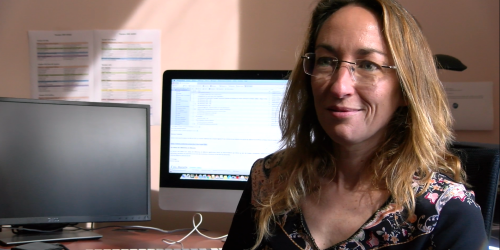
LIRIS Seminar, June 22 — Isabelle Régner: The Influence of Gender Stereotypes.
Abstract: Action plans designed to promote gender equality within the civil service have led to a number of advances. However, inequalities persist among staff in terms of recruitment, promotion, access to the most prestigious positions, and representation in STEM disciplines - Science, Technology, Computer Science, and Mathematics. Research in Social Cognition has helped show that these inequalities are, at least in part, linked to gender stereotypes that, even today, lead people to associate leadership and management abilities, as well as scientific skills, more strongly with men than with women. This presentation will discuss several findings that help explain how these stereotypes can, on the one hand, negatively influence women’s performance and, on the other, generate subtle biases and discriminatory processes by shaping evaluators’ decisions during recruitment and promotion procedures.
Isabelle Régner is Professor of Social Psychology at Aix-Marseille University, at the Centre for Research in Psychology and Neuroscience (UMR CNRS 7077), where she has served as Deputy Director since January 2024. She directed the Centre for Social Sciences for Science from 2014 to 2020 and was appointed Vice-President for Gender Equality and the Fight against Discrimination in January 2020. Since 2021, she has been a member of Working Group 9, “Equity and Reduction of Educational Inequalities,” of the Scientific Council for National Education. Since 2023, she has coordinated the WE4LEAD project - Women Empowerment for Leadership in Higher Education and Research Institutions - a partnership involving Lebanon, Algeria, Tunisia, Spain, and Italy, dedicated to promoting women’s leadership in higher education and research.
Her research focuses on the social regulation of cognitive functioning in both laboratory and natural settings, including academic and clinical contexts. In particular, she studies the effects of social stereotypes on performance and evaluation across different areas of competence, such as mathematics, reading, and memory, and among different populations, including children, young adults, adults with dyslexia, selection committees, older adults, and patients in the prodromal phase of Alzheimer’s disease. Her institutional and international commitments, particularly through WE4LEAD, are grounded in this scientific research, translating its findings into training, regulatory, and international cooperation initiatives. She is the author of around sixty scientific publications in international journals and regularly gives public lectures.